Forschungszulage beantragen: Wie funktioniert der Antrag?
Zusammenfassung
Die Forschungszulage beantragst Du in zwei Schritten: Erst stellst Du einen technischen Antrag bei der Bescheinigungsstelle Forschungszulage (BSFZ), dann einen steuerlichen Antrag beim Finanzamt über ELSTER. Der BSFZ-Antrag ist kostenlos, die Bearbeitungszeit liegt bei rund zwei Monaten. Du hast einen Rechtsanspruch auf die Förderung – wenn Dein Projekt die Kriterien erfüllt, wird sie bewilligt. Der Antrag kann bis zu vier Jahre rückwirkend gestellt werden und es ist keine Vorabgenehmigung nötig. Je nach Unternehmensart und Zeitraum erhältst Du 25–35% Deiner FuE-Aufwendungen zurück.
Überblick: Der Antrag auf Forschungszulage
Wer prüft Deinen Antrag? Bescheinigungsstelle Forschungszulage (BSFZ)
Die Bescheinigungsstelle Forschungszulage (BSFZ) ist die zentrale Stelle für die fachliche Prüfung von FuE-Vorhaben. § 5 FZulG Sie nimmt Anträge über ihr Online-Portal entgegen und verteilt sie zur Begutachtung an spezialisierte Institute. Die BSFZ Forschungszulage ist damit der erste Schritt, wenn Du die Forschungszulage beantragen willst.
Du kannst nicht beeinflussen, welches Institut Deinen Antrag prüft. Die Bearbeitungszeit variiert je nach Institut und Auslastung. Sind Angaben unvollständig, erhältst Du eine Nachforderung – in der Regel nur eine Chance zur Stellungnahme. Prüfleitfaden BSFZ, Kap. 1.1.4: „Sind Angaben zu den drei Kriterien erkennbar fehlerhaft oder unvollständig, wird den antragstellenden Unternehmen schriftlich die Möglichkeit gegeben, innerhalb einer angemessenen Frist Angaben zu ergänzen oder zu vervollständigen (Nachforderung). Ist mindestens ein Kriterium unabhängig von einer etwaigen Nachforderung unzweifelhaft nicht erfüllt, wird zu den anderen Kriterien keine Nachforderung gestellt.“ Bei Änderungsanträgen – wenn Du ein bereits bescheinigtes Vorhaben anpassen musst – geht die Bearbeitung in der Regel deutlich schneller als beim Erstantrag.
Wer liest Deinen Antrag? Ehemalige Forschungsleiter und Ingenieure
Dein Antrag wird nicht von Sachbearbeitern gelesen, sondern von Fachgutachtern mit technischem Hintergrund: ehemalige Heads of Research, Ingenieure, Programmierer und Naturwissenschaftler. Sie bewerten anhand des offiziellen Prüfleitfadens, ob Dein Vorhaben die drei FuE-Kriterien erfüllt. Prüfleitfaden BSFZ, Kap. 1: „Jeder Forschungs- und Entwicklungsprozess besteht aus drei wesentlichen Teilen: Start/Ausgangslage, Weg zur Umsetzung, Ziel: Produkt, Verfahren oder Dienstleistung.“
Das bedeutet: Schreibe für Techniker, nicht für Manager. Allgemeine oder marketingorientierte Beschreibungen wie „innovatives Produkt" oder „mehr Umsatz" überzeugen die Prüfer nicht. Stattdessen wollen sie konkret wissen: Was ist der aktuelle Stand der Technik? Was genau ist daran technisch neu? Welches wissenschaftliche oder technische Risiko besteht? Prüfleitfaden BSFZ, Kap. 1.1.2: „Die BSFZ bezieht sich bei der Bewertung des Kriteriums Unwägbarkeit / Risiko ausschließlich auf wissenschaftliche und technische Aspekte. Wirtschaftliche Risiken und Unwägbarkeiten werden zur Beurteilung, ob ein FuE-Vorhaben im Sinne des FZulG vorliegt, nicht herangezogen.“
Wie wird mein Antrag geprüft?
Die Prüfer arbeiten nach dem offiziellen Prüfleitfaden der BSFZ – dem zentralen Dokument, das festlegt, was als FuE gilt und was nicht.
Die BSFZ prüft jedes Vorhaben anhand von drei Kriterien (§ 2 FZulG). Alle drei müssen erfüllt sein. Eine detaillierte Erklärung findest Du im Voraussetzungen-Guide – hier die Perspektive der Prüfer:
Neuartigkeit
Dein Vorhaben muss auf neues Wissen oder wesentlich verbesserte Produkte, Verfahren oder Dienstleistungen abzielen – gemessen am Stand der Technik in Deiner Branche.
Auch kleine Veränderungen können neuartig sein, wenn vorhandene Technologien auf neue Weise kombiniert werden. Routinemäßige Änderungen sind nicht förderfähig.
Mehr zu Neuartigkeit →Unwägbarkeit / Risiko
Es müssen wissenschaftliche oder technische Risiken vorliegen, die die Zielerreichung gefährden können. Wirtschaftliche Risiken zählen nicht.
Risikodefinition der BSFZ: Der ursprüngliche Lösungsansatz ist möglicherweise nicht umsetzbar und macht einen alternativen Lösungsansatz erforderlich.
Mehr zu Unwägbarkeit →Planmäßigkeit
Das Vorhaben muss systematisch und dokumentiert durchgeführt werden – mit klar festgelegten Zielen und nachvollziehbarer Methodik.
Agile Entwicklung ist kein Problem – entscheidend ist, dass der Lösungsansatz fachlich schlüssig und wissenschaftlich fundiert ist.
Mehr zu Planmäßigkeit →Nicht jede Tätigkeit ist automatisch förderfähig – die BSFZ grenzt im Prüfleitfaden klar ab, was bescheinigungsfähig ist und was nicht (§ 2 Abs. 2 FZulG). Die förderfähige Phase endet beispielsweise bereits mit dem Test eines Prototyps. Prüfleitfaden BSFZ, Kap. 2.1.2: „Dazu zählen unter anderem Tätigkeiten, die primär auf die Marktentwicklung eines im Wesentlichen festgelegten Produktes oder Verfahrens abzielen oder zum Ziel haben, ein Produktionssystem zum reibungslosen Funktionieren zu bringen. Die FuE-Phase endet mit dem Test eines Prototyps.“
Was genau die BSFZ fördert, wie Du Dein Projekt richtig einordnest und welche typischen Fehler Du vermeiden solltest, erfährst Du im Detail im Voraussetzungen-Guide.
Kosten im Antrag: So funktioniert die Plausibilitätsprüfung der BSFZ
Ein wichtiger Unterschied: Die BSFZ prüft Deine Kostenangaben nur auf Plausibilität, nicht im Detail. Prüfleitfaden BSFZ, Kap. 1.2: „Bezogen auf die Angaben zum finanziellen und personellen Rahmen wird durch die BSFZ eine Plausibilitätsprüfung „dem Grunde nach" durchgeführt. Mangelnde Plausibilität liegt vor, wenn die Angaben des antragstellenden Unternehmens zum personellen Aufwand und/oder zu den Auftragskosten grob unschlüssig, widersprüchlich oder fehlerhaft sind.“ Das bedeutet, sie schaut, ob die Angaben zum personellen Aufwand und zu den Kosten grundsätzlich schlüssig sind – nicht ob jede Zahl exakt stimmt.
Was die BSFZ als unplausibel beanstanden würde: Wenn ein E-Commerce-Unternehmen angibt, dass 100% der Mitarbeiter ausschließlich FuE betreiben. Wenn aber ein Technologieunternehmen 20–30% seiner Personalkosten als FuE deklariert, ist das nachvollziehbar.
Die Empfehlung: Lieber großzügig schätzen. Die detaillierte Prüfung erfolgt erst beim Finanzamt – und dort ist es einfacher, weniger zu bewilligen als nachträglich aufzustocken.
Welche Kostenarten förderfähig sind – inklusive Auftragsforschung (§ 3 Abs. 4 FZulG) und Wirtschaftsgüter (§ 3 Abs. 3a FZulG) – wie die Bemessungsgrundlage berechnet wird und was sich ab 2026 ändert, findest Du im Berechnung-Guide.
Timing: Wann solltest Du den Antrag stellen?
Die Forschungszulage kann bis zu vier Jahre rückwirkend beantragt werden (§ 6 FZulG). Das macht sie grundlegend anders als klassische Förderprogramme, bei denen Du vorab beantragst und dann berichten musst, was tatsächlich passiert ist.
Empfohlene Strategie:
- 1–2 Jahre rückwirkend beantragen – für bereits abgeschlossene Projektphasen
- Das aktuelle Jahr mit einplanen
- Bei der Zukunftsplanung nur so weit gehen, wie die Planungssicherheit reicht
Der große Vorteil der rückwirkenden Beantragung: Du weißt bereits, was tatsächlich geforscht wurde. Kein aufwändiges Reporting, keine Abweichungen vom ursprünglichen Plan – ein häufiger Schmerzpunkt bei klassischen EU-Förderprogrammen.
Neu ab 2026
Für Projekte, die ab 2026 starten, gibt es zusätzlich 20% Gemeinkosten on top auf die förderfähigen Personalkosten. Es kann sich also lohnen, den Projektstart entsprechend zu planen. Mehr dazu im Berechnung-Guide.
Rückwirkend oder im Voraus beantragen?
Ein wichtiger Punkt: Die BSFZ-Bescheinigung gilt für das gesamte Vorhaben – inklusive der gesamten Laufzeit. Den Antrag beim Finanzamt stellst Du dann aber pro Wirtschaftsjahr separat. Du nutzt also dieselbe BSFZ-Bescheinigung für mehrere Finanzamt-Anträge.
Das eröffnet zwei Strategien:
Rückwirkend für mehrere Jahre auf einmal – Du beantragst die BSFZ-Bescheinigung für ein Vorhaben, das bereits seit 2–3 Jahren läuft, und reichst anschließend für jedes vergangene Wirtschaftsjahr einen eigenen Finanzamt-Antrag ein. Das ist die effizienteste Variante, weil Du genau weißt, was tatsächlich an FuE-Aufwendungen angefallen ist. Kein Schätzen, kein Nachberichten.
Jährlich mit derselben Bescheinigung – Du holst die BSFZ-Bescheinigung einmal und stellst dann jedes Jahr nach Ablauf des Wirtschaftsjahres den Finanzamt-Antrag. Das lohnt sich bei laufenden Vorhaben, die sich über mehrere Jahre erstrecken.
In der Praxis empfehlen wir eine Kombination: Beim Erstantrag 1–2 Jahre rückwirkend plus das aktuelle Jahr abdecken und danach jährlich den Finanzamt-Antrag für das abgelaufene Wirtschaftsjahr stellen.
Wichtig bei der Kostenschätzung: Die Kosten, die Du im BSFZ-Antrag angibst, müssen plausibel sein. Weichen die tatsächlichen Aufwendungen später deutlich von der Schätzung ab, kann ein Änderungsantrag bei der BSFZ nötig werden – das kostet Zeit. Schätze deshalb realistisch und lieber etwas großzügiger.
Projekte strategisch aufteilen
Durch die geänderten Fördersätze ab 2024 und 2026 kann es sich lohnen, Vorhaben zeitlich so aufzuteilen, dass Aufwendungen in die jeweils günstigere Förderperiode fallen. Besonders die höheren Fördersätze für KMU und die neuen Gemeinkostenzuschläge ab 2026 machen eine bewusste Planung attraktiv.
Kann der Antrag nachträglich geändert werden?
Bei der BSFZ: Ja, aber aufwändig. Solange die BSFZ den Antrag noch bearbeitet oder bereits bescheinigt hat, kannst Du einen Änderungsantrag stellen. Das ist zum Beispiel nötig, wenn sich die Kosten wesentlich verändert haben, der Projektzeitraum sich verschoben hat oder neue Teilprojekte hinzugekommen sind. Die Bearbeitungszeit für Änderungsanträge ist in der Regel kürzer als beim Erstantrag – aber es bedeutet trotzdem zusätzlichen Aufwand und Wartezeit.
Beim Finanzamt: Nein. Sobald der Antrag auf Forschungszulage beim Finanzamt eingereicht ist, ist eine Änderung nicht mehr möglich. Deshalb ist es entscheidend, dass die Angaben beim Finanzamt-Antrag korrekt und vollständig sind. Wenn sich nach der BSFZ-Bescheinigung noch etwas am Projekt ändert, musst Du zuerst den Änderungsantrag bei der BSFZ stellen und den neuen Bescheid abwarten, bevor Du den Finanzamt-Antrag einreichst.
Unsicher, ob Dein Projekt förderfähig ist? Wir prüfen das gerne mit Dir – kostenlos und unverbindlich.
Forschungszulage Finanzamt: Der Antrag über ELSTER
Nach Erhalt der BSFZ-Bescheinigung stellst Du den Forschungszulage Antrag beim zuständigen Finanzamt über Mein ELSTER (§ 6 FZulG). Hier wird es konkret – das Finanzamt prüft die tatsächlichen Aufwendungen im Detail:
- Bruttogehälter der am FuE-Projekt beteiligten Mitarbeiter
- Stundenzettel als Nachweis der tatsächlich geleisteten FuE-Arbeitsstunden
- Arbeitsverträge zur Verifizierung der Beschäftigungsverhältnisse
- Rechnungen bei Auftragsforschung und Wirtschaftsgütern
- Korrekte Berechnung der Bemessungsgrundlage und Einhaltung der Obergrenzen
Das Projekt muss dabei im Wesen das gleiche sein, das bei der BSFZ beschrieben wurde. Wenn sich Dein Projekt wesentlich verändert hat, musst Du zuerst einen Änderungsantrag bei der BSFZ stellen und einen neuen Bescheid erhalten, bevor das Finanzamt weiter prüft.
Betriebsprüfungen kommen vor – insbesondere bei höheren Fördersummen schauen sich Prüfer genau an, ob alles kohärent ist. Eine saubere Dokumentation von Anfang an ist daher entscheidend.
Steuerfreiheit
Die Forschungszulage ist selbst nicht steuerpflichtig. Sie wird als Steuervergütung behandelt und mit der nächsten Ertragsteuerfestsetzung verrechnet. Bei fehlenden Gewinnen wird sie als Steuererstattung ausgezahlt.
Du willst die maximale Förderung rausholen? Wir übernehmen die Antragstellung und Dokumentation.
Forschungszulage vs. klassische Förderprogramme: Unterschiede im Antrag
Wer Erfahrung mit ZIM, BMBF-Programmen oder EU-Projektförderungen hat, kennt den typischen Ablauf: Projektantrag vor Beginn einreichen, Zwischenberichte schreiben, Meilensteine abnehmen lassen, Verwendungsnachweise liefern – und am Ende begründen, warum das Projekt anders gelaufen ist als geplant. Bei der Forschungszulage ist der Antragsprozess grundlegend anders:
Der größte Unterschied in der Praxis: Bei klassischer Förderung ist das laufende Reporting der Schmerzpunkt. Bei der Forschungszulage beschreibst Du rückwirkend, was tatsächlich passiert ist – kein Erklären von Planabweichungen, kein Nachberichten. Dafür wird die Qualität des BSFZ-Antrags zum entscheidenden Faktor: Wer hier technisch ungenau formuliert, riskiert eine Ablehnung oder muss zeitaufwändig nachbessern.
Warum der Antrag mit uns besser klappt: Technische Expertise trifft eigene Software
Unser Gründer Erich Lehmann ist selbst Entwickler. In einem kurzen Gespräch mit Deinem technischen Team versteht er, was Ihr baut und wo die echte Neuartigkeit liegt – ohne dass jemand „übersetzen" muss. Wir übernehmen dann die komplette Antragstellung: BSFZ-Antrag, Projektbeschreibungen, Kostenberechnung, Finanzamt-Antrag und Kommunikation bei Rückfragen. Du bringst nur Deine Expertise ein – in der Regel reichen 4 strukturierte Calls.
Eigene Software statt Excel-Chaos
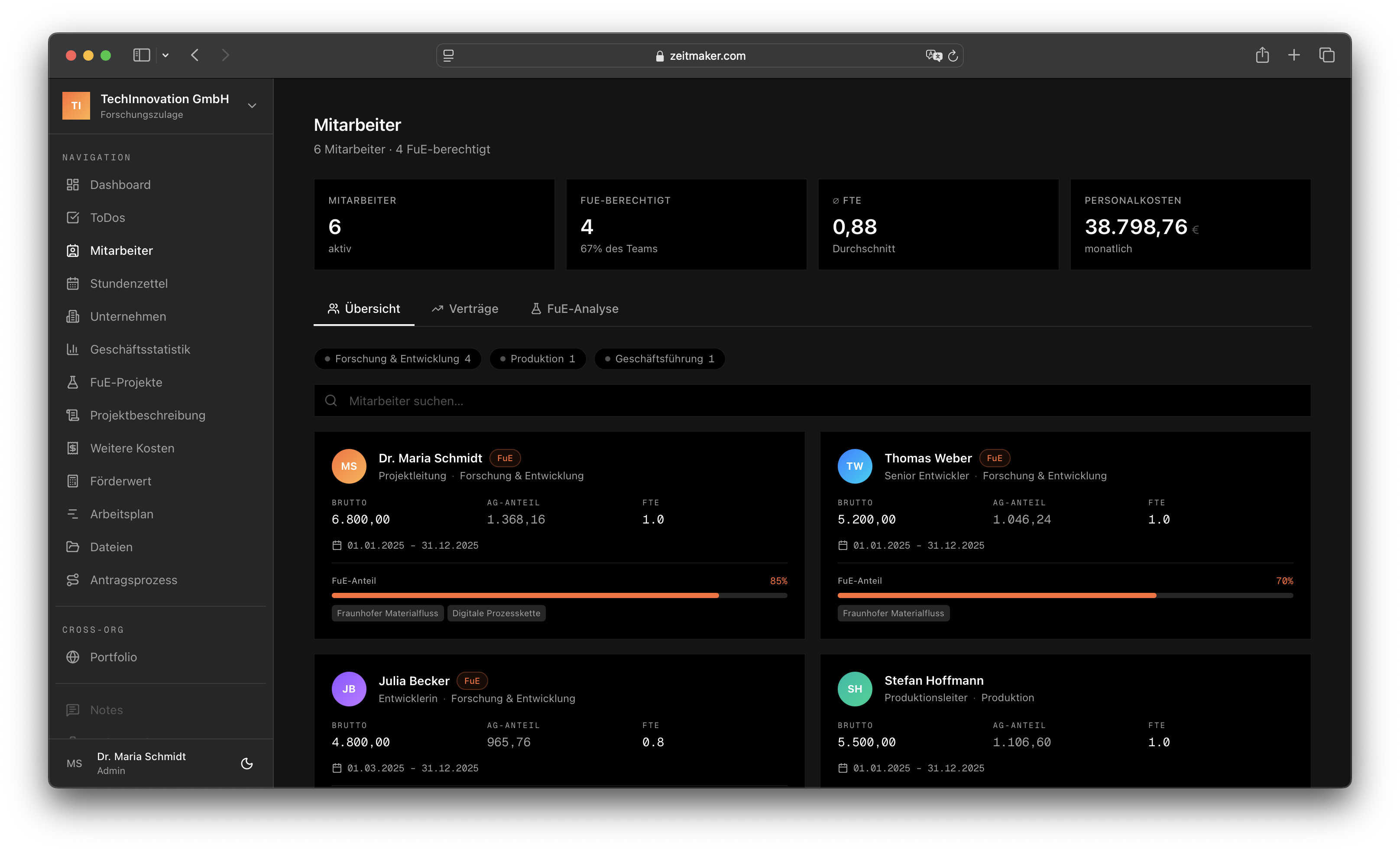
Dabei arbeiten wir nicht mit Excel-Tabellen und Word-Dokumenten. Wir haben eine eigene Software gebaut, die uns bei der Antragstellung unterstützt – damit wir nichts übersehen und alles stimmt.
- Keine Rechenfehler – Fördersätze und Obergrenzen automatisch korrekt
- Prüfungssicher – Nachweise für Betriebsprüfungen aufbereitet
- Maximale Förderung – Im Schnitt 25% mehr als bei Eigenantragstellung
- Wasserdicht – Keine Inkonsistenzen wie bei Excel-Listen
Was sagen unsere Kunden?
“Super schnelle und effiziente Unterstützung bei der Forschungszulage. Der Prozess war in nur 4 Calls erledigt.”

“Erich erzielte eine Förderung von €350k pro Jahr und übertraf damit unsere Erwartungen um +€75k pro Jahr.”

“Erich hat uns sehr gut unterstützt und wir konnten uns auf unser Produkt konzentrieren. Extrem effizient in nur 4 Calls.”

“Sehr gute Arbeit und Dokumentation. Ich hatte extrem wenig Aufwand, alles war in 3 Calls erledigt.”

“Exzellente Unterstützung. Wir konnten unsere fliegenden Windkraftwerke schneller voranbringen. Nur 3 Calls benötigt.”

“Super schnelle und effiziente Unterstützung bei der Forschungszulage. Der Prozess war in nur 4 Calls erledigt.”
“Erich erzielte eine Förderung von €350k pro Jahr und übertraf damit unsere Erwartungen um +€75k pro Jahr.”
“Erich hat uns sehr gut unterstützt und wir konnten uns auf unser Produkt konzentrieren. Extrem effizient in nur 4 Calls.”
“Sehr gute Arbeit und Dokumentation. Ich hatte extrem wenig Aufwand, alles war in 3 Calls erledigt.”
“Exzellente Unterstützung. Wir konnten unsere fliegenden Windkraftwerke schneller voranbringen. Nur 3 Calls benötigt.”
Hast Du noch Fragen zu diesem Thema?
Gerne besprechen wir Deinen konkreten Fall in einer kostenlosen Erstberatung. Wir finden in wenigen Minuten heraus, wie viel Förderung Du für Dein Unternehmen erhalten kannst.